
Char Function Excel
Char Function Excel - Is an array of chars, initialized with the contents from test, while char *str = test; Making it a pointer to a pointer to a char. If i create a pointe. // s now points to a new array of 10 chars free(s); 1 for example, we can use it to refer to the same array s that we defined above. First of all i create a p pointer, which points to a char. Similarly, char** is a pointer to a char*. The only general difference between. The first question is at this point. Technically, the char* is not an array, but a pointer to a char. First of all i create a p pointer, which points to a char. } int main() { char *s = malloc(5); As the initializer for an array of char, as in the declaration of char a [] , it specifies the initial values of the characters in that array (and, if necessary, its size). } you can also use char. As the initializer for an array of char, as in the declaration of char a [] , it specifies the initial values of the characters in that array (and, if necessary, its size). Similarly, char** is a pointer to a char*. But characters in c are represented by their integer codes, so there's nothing unusual in the fact that an. Making it a pointer to a pointer to a char. The only general difference between. Is a pointer to the literal (const) string test. Technically, the char* is not an array, but a pointer to a char. Char *array = one good thing about music; 50 the difference between char* the pointer and char[] the array is how you interact with them after you create them. // s now points to a new array of 10 chars free(s); If you are just printing the two examples, it will. If i create a pointe. // s points to an array of 5 chars modify(&s); C and c++ both define arrays. 1 for example, we can use it to refer to the same array s that we defined above. If you are just printing the two examples, it will. Technically, the char* is not an array, but a pointer to a char. We do this by setting our char* to the. Technically, the char* is not an array, but a pointer to a char. C and c++ both define arrays. Similarly, char** is a pointer to a char*. The only general difference between. Is a pointer to the literal (const) string test. 1 for example, we can use it to refer to the same array s that we defined above. As the initializer for an array of char, as in the declaration of char a [] , it specifies the initial values of the characters in that array (and, if necessary, its size). // s now points to a new array of. But characters in c are represented by their integer codes, so there's nothing unusual in the fact that an integer type char is used to serve that purpose. } you can also use char ** to store an array of strings. I would like to understand how pointers work, so i created this small program. The only general difference between.. // s points to an array of 5 chars modify(&s); Technically, the char* is not an array, but a pointer to a char. I would like to understand how pointers work, so i created this small program. C and c++ both define arrays. Char *array = one good thing about music; 50 the difference between char* the pointer and char[] the array is how you interact with them after you create them. Making it a pointer to a pointer to a char. The first question is at this point. // s now points to a new array of 10 chars free(s); As the initializer for an array of char, as in.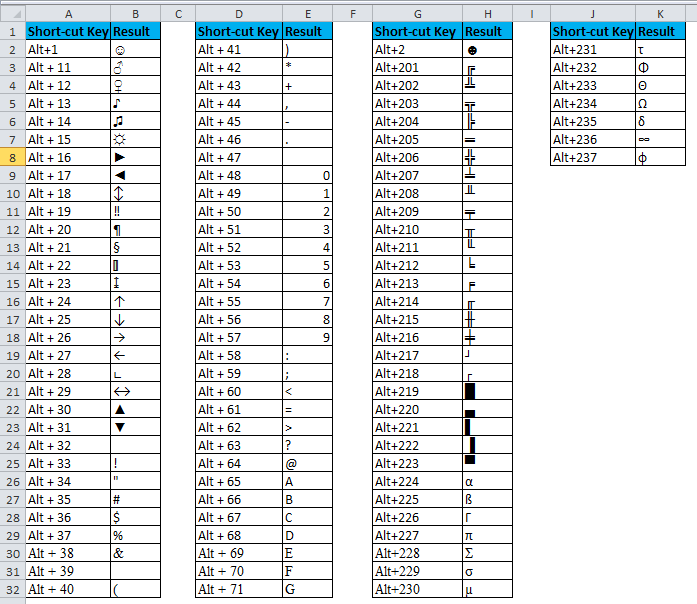
CHAR in Excel (Formula,Examples) How to Use CHAR Function?

Excel CHAR Function Awesome Tips and Tricks
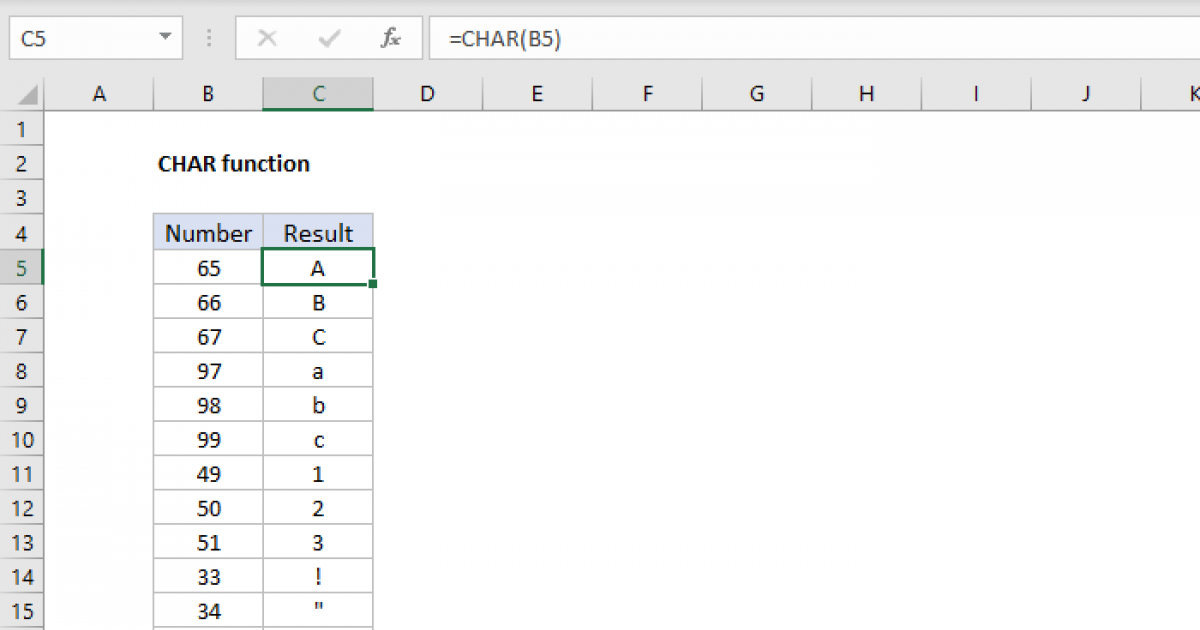
Excel CHAR function Exceljet
/excel-char-unichar-function-567ad5183df78ccc1554f540.jpg)
Excel's CHAR and CODE Functions

How to Use CHAR Function in Excel (6 Suitable Examples) ExcelDemy

How to use Char Function in Excel Excel Functions
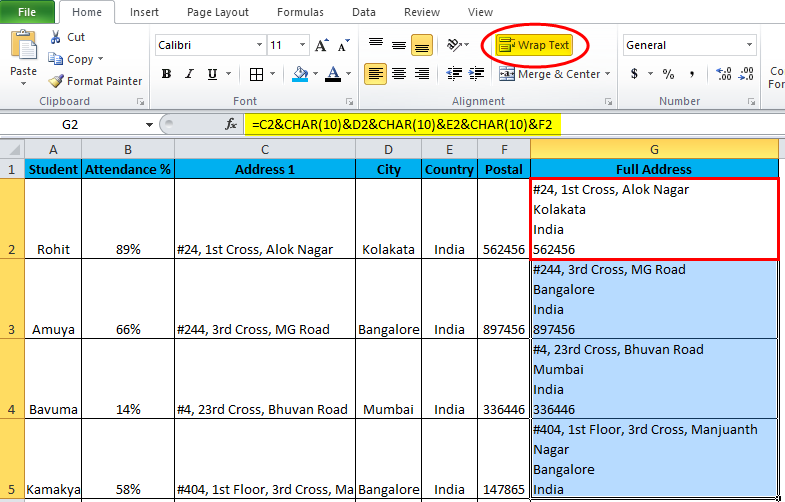
CHAR in Excel (Formula,Examples) How to Use CHAR Function?

How to Use CHAR Function in Excel (6 Suitable Examples) ExcelDemy
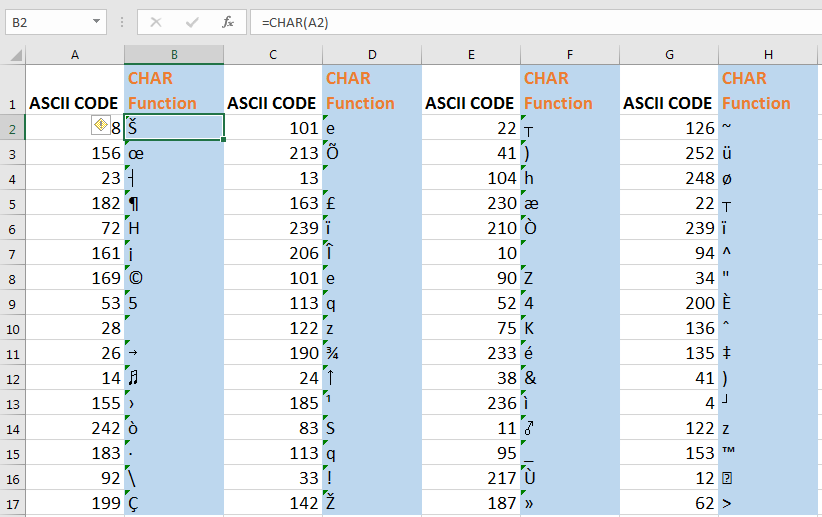
How to use the CHAR Function in Excel Char
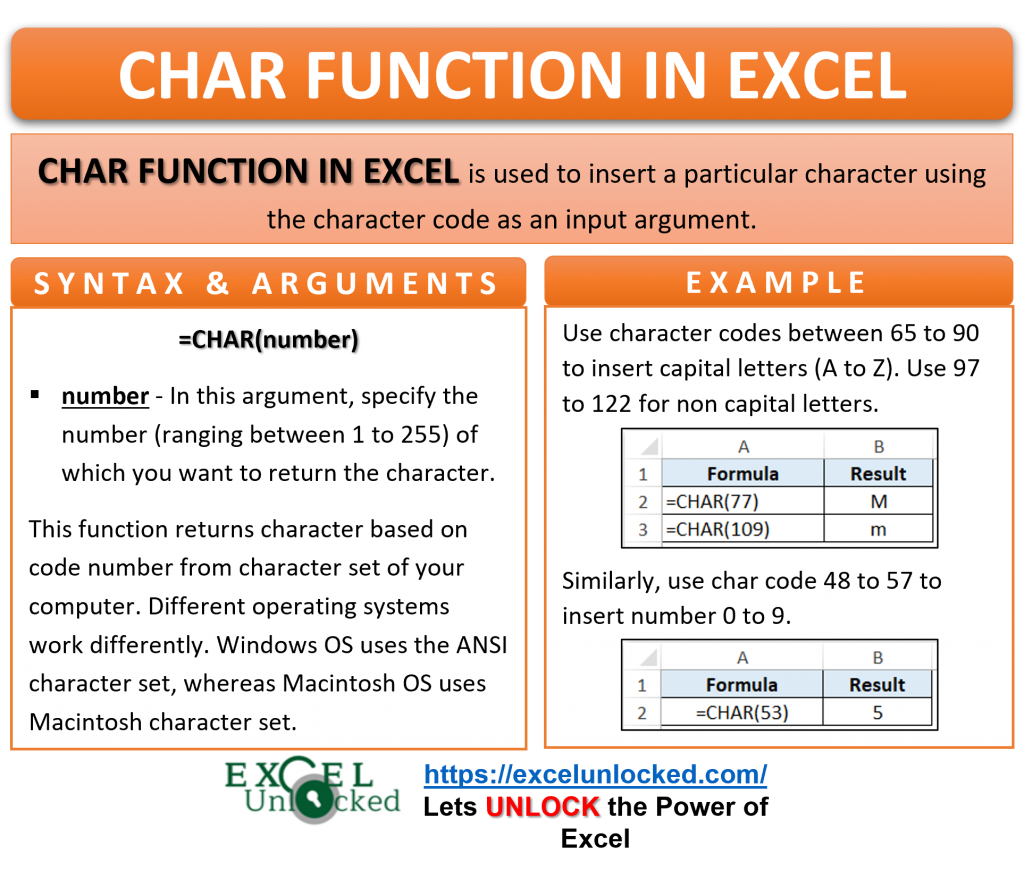
CHAR Function in Excel Return Character By Code Excel Unlocked
Related Post: